
Why Doesn't the Fastest Driver Always Win?
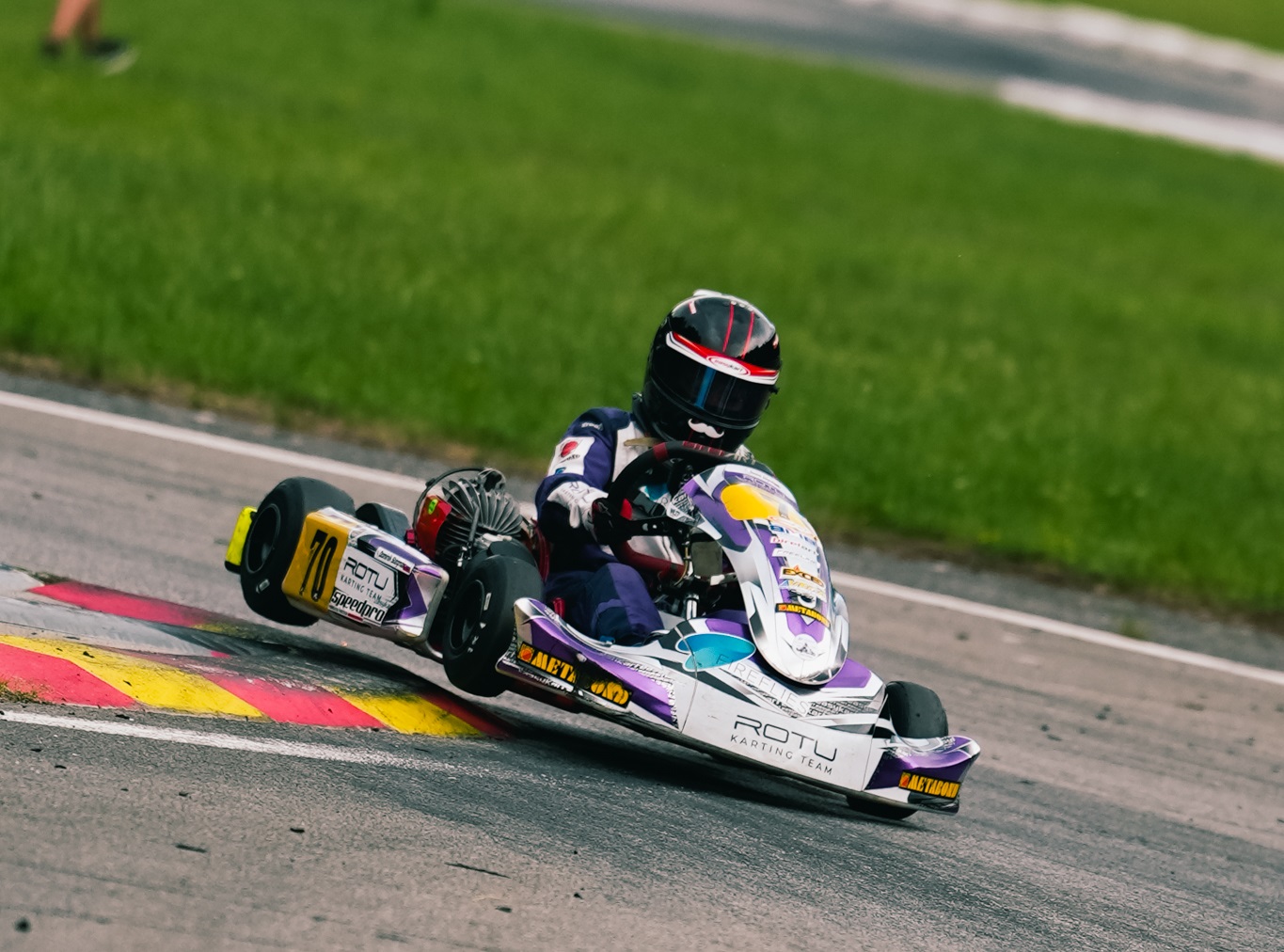
One fast lap does not mean a win. Part of a race happens on the track, and another part happens in our heads.
Many people think kart races are always won by whoever is fastest. But if it were that simple, we would only need to hold a qualifying session, and we would already know the winner.
In reality, racing is much more complicated. The start, overtaking, defending, concentration and mental readiness can be just as important as speed itself. Over the past few years, I have experienced this several times too.
When We Look Behind Instead of Ahead
I have had races where my speed could have earned me a better result, but I still could not move forward.
When we analysed the races, we noticed that I sometimes spent too much time thinking about the drivers behind me. Instead of trying to catch those ahead, I focused on protecting my own position.
Defending is, of course, part of racing. But it matters whether we really need to defend or are simply afraid that someone might overtake us.
Defending too early changes our ideal racing lines, can reduce our corner speed and can make us lose our own rhythm. That helps the very drivers we are worried about get closer to us.
Franciacorta – When an Opportunity Became Pressure
One of the best examples is my 2025 race at Franciacorta in Italy.
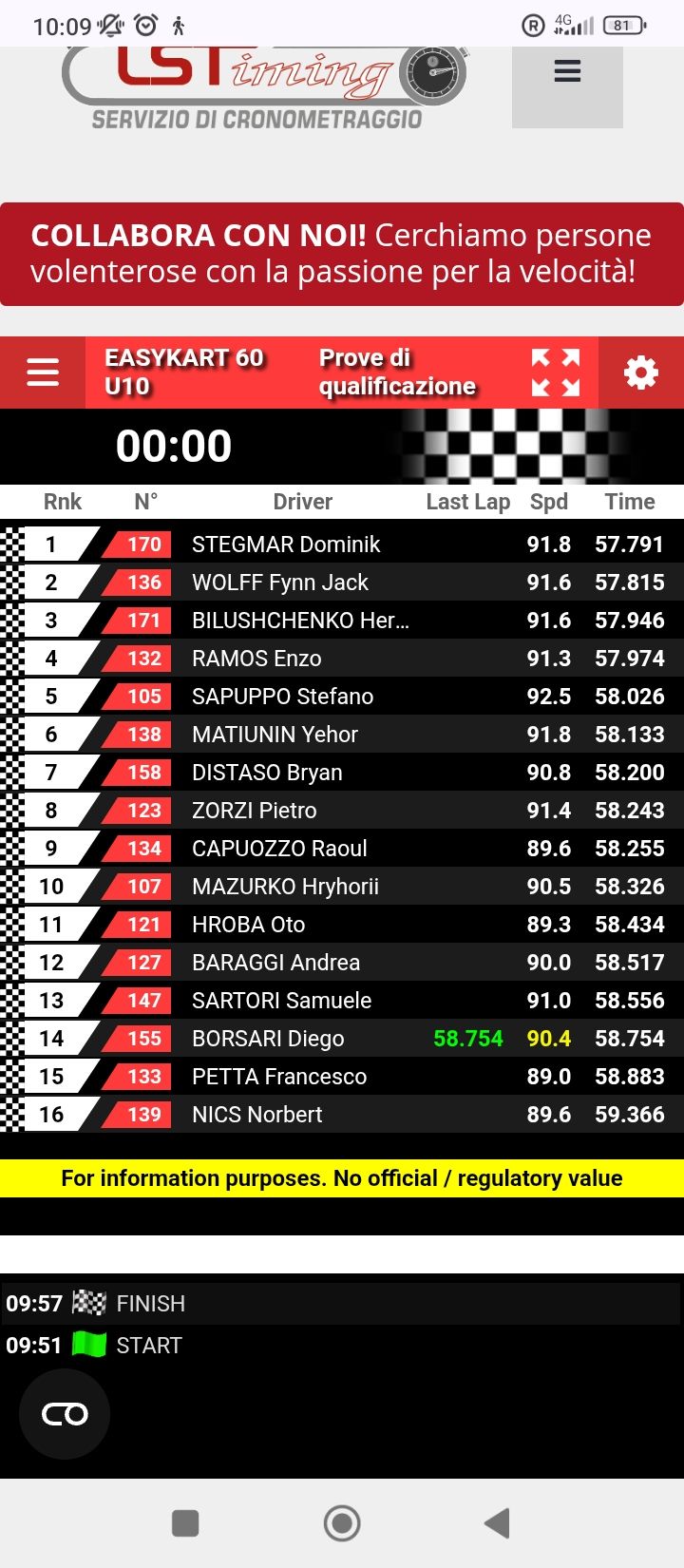
In Easykart 60 U10 qualifying, I took pole position with a lap time of 57.791 seconds ahead of Fynn Jack Wolff, who recorded 57.815 seconds.
Just 24 thousandths of a second separated us.
It was a great result that showed I had the speed to race at the front.
But I could not deliver the same performance in the races.
My parents noticed that I was too worried about protecting the position I had earned. Later, I also analysed what had happened with my mental coach.
One lesson was that even the chance of winning can put pressure on a driver. When we unexpectedly find ourselves in a situation where we could win, our thinking can easily change.
Instead of continuing to concentrate on our own performance, we can start worrying about the result.
We are not racing to win, but racing not to lose.
And there is a huge difference between the two.
At Franciacorta, I had the speed, but the final result was far below what my qualifying performance had made possible.
Písek and Jesolo – When Everything Comes Together
Luckily, I have also had races that showed the exact opposite.
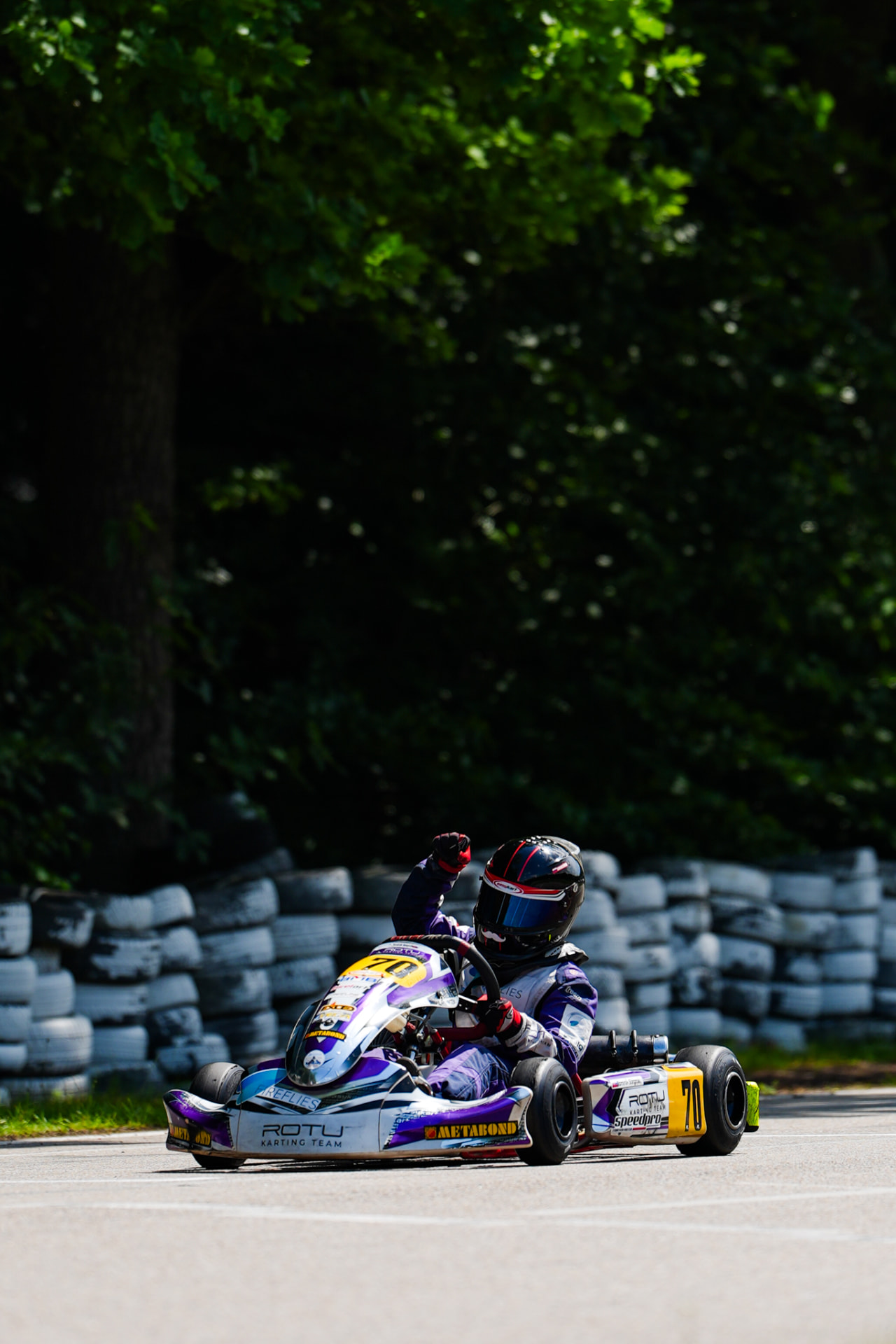
In 2026, at the Czech Kart Open round in Písek, I took pole position, won all three races and set the fastest lap too.
My race at Jesolo in Italy went similarly well, and I won there too.
On those weekends, I had not only the speed but also confidence on the track. My racing did not show the uncertainty that had appeared earlier at Franciacorta.
These three races show clearly that pole position alone does not guarantee anything. How we use the opportunity we have earned matters too.
One Fast Lap or Ten Consistent Laps?
Imagine two drivers in a ten-lap race.
One can set a lap time of 49.4 seconds, but makes several mistakes and their lap times vary a lot.
The other's best lap is only 50.0 seconds, but they can maintain almost the same pace on every lap.
Illustrative, fictional data – not real race telemetry.
| Lap | Driver A | Driver B |
|---|---|---|
| 1 | 49.5 | 50.1 |
| 2 | 50.9 | 50.0 |
| 3 | 49.7 | 50.1 |
| 4 | 51.5 | 50.2 |
| 5 | 49.6 | 50.0 |
| 6 | 50.8 | 50.1 |
| 7 | 49.4 | 50.0 |
| 8 | 51.2 | 50.1 |
| 9 | 50.6 | 50.0 |
| 10 | 50.2 | 50.1 |
| Total time (s) | 503.4 | 500.7 |
| Average (s) | 50.34 | 50.07 |
| Fastest lap (s) | 49.4 | 50.0 |
Driver B’s winning margin: 2.7 s
The second driver wins by 2.7 seconds, even though there is a six-tenths-of-a-second difference between their fastest laps.
But consistent performance needs more than good driving technique. It also needs continuous concentration.
Mental Preparation Is Training Too
In karting, we spend a lot of time improving our driving technique. We practise braking, ideal racing lines and overtaking, and we also prepare physically for races.
But we need to train our minds too.
Working with my mental coach helps me understand and analyse the situations that arise during races.
How do we handle pressure? How do we stay focused after a mistake? How can we perform at our best even when the stakes are high?
This is not something we can learn overnight. It needs continuous development, just like our driving technique.
Being Fast Is Not Enough
I am still only at the beginning of my racing career, and I have so much to learn. But the past few years have already shown me that progress cannot always be measured in tenths of a second.
Sometimes we do not need to become faster. We need to learn how to make better use of the speed we already have.
We need to learn to look ahead, trust ourselves, make the right decisions and handle the pressure we are under.
A driver does not only need to learn how to lose. They also need to be prepared for the possibility of winning.
The full stories of these race weekends: 2025 – Finding My Speed Again
The full stories of these race weekends: 2026 – It Started in Italy
The full stories of these race weekends: 2026 – The First Three Czech Kart Open Rounds
Dominik Stégmár #70
Dominik Stégmár’s Story
Dominik Stégmár #70
ROTU Karting Team
Learn more about me